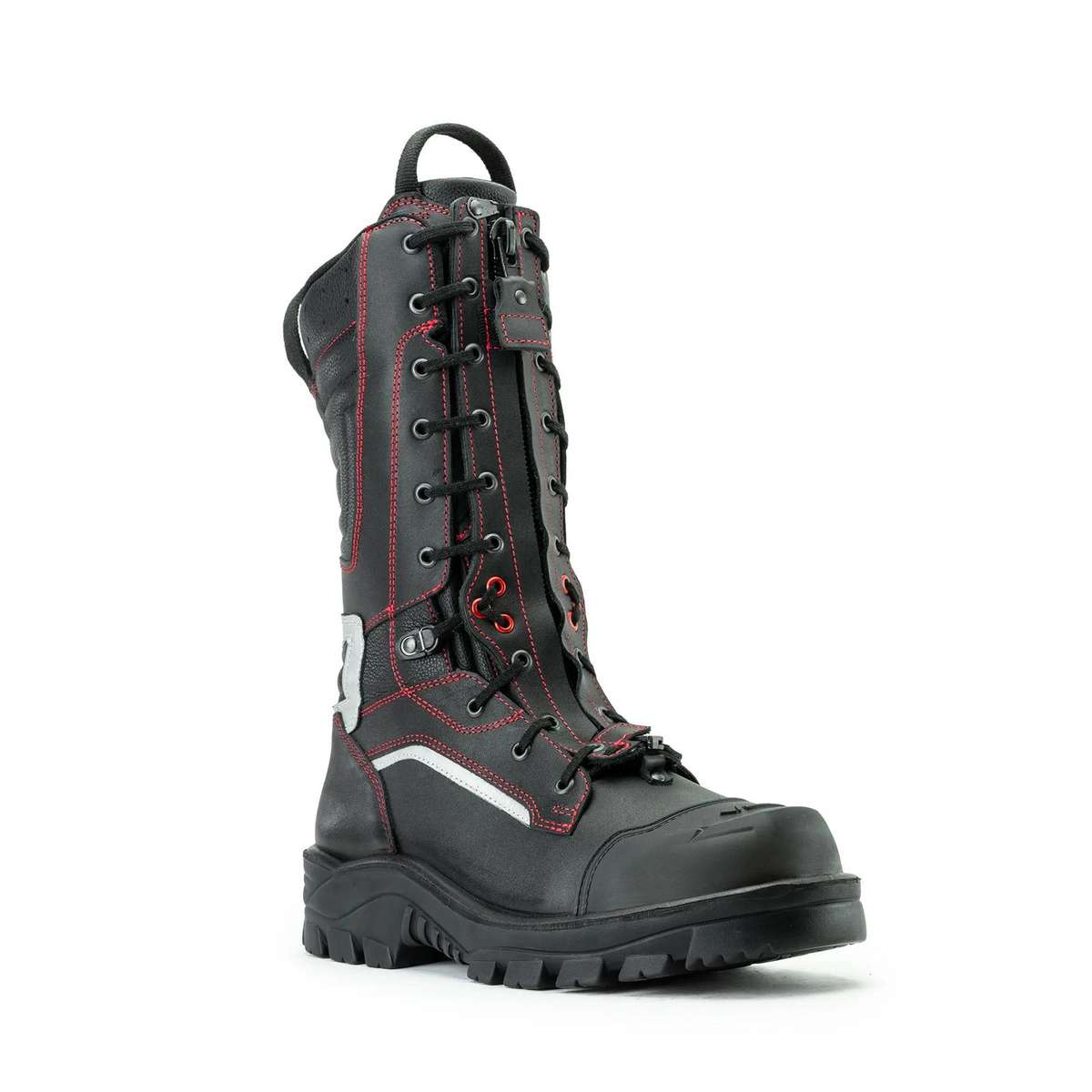
Voelkl
Voelkl ONE
Premium structural boot with maximum heat and chemical protection
- Certification: EN15090:2012 — F2A HI3 HO3 CI SRC WR FO AN
- Upper: Full-grain bovine leather, 2.2 mm thickness, water-repellent treated
- Moisture barrier: Gore-Tex® Extended Comfort liner — waterproof and breathable
- Midsole: Steel anti-penetration plate, resistant to 1,100 N puncture force
- Toe cap: Steel, 200 J impact resistant
- Outsole: Rubber compound, heat-resistant to 300°C contact, slip-resistant SRC
- Insulation (CI): Cold-insulated to −17°C ground contact
- Sizes: EU 36–48 (half sizes available)
- Weight (per boot): Approx. 750 g (size EU 42)
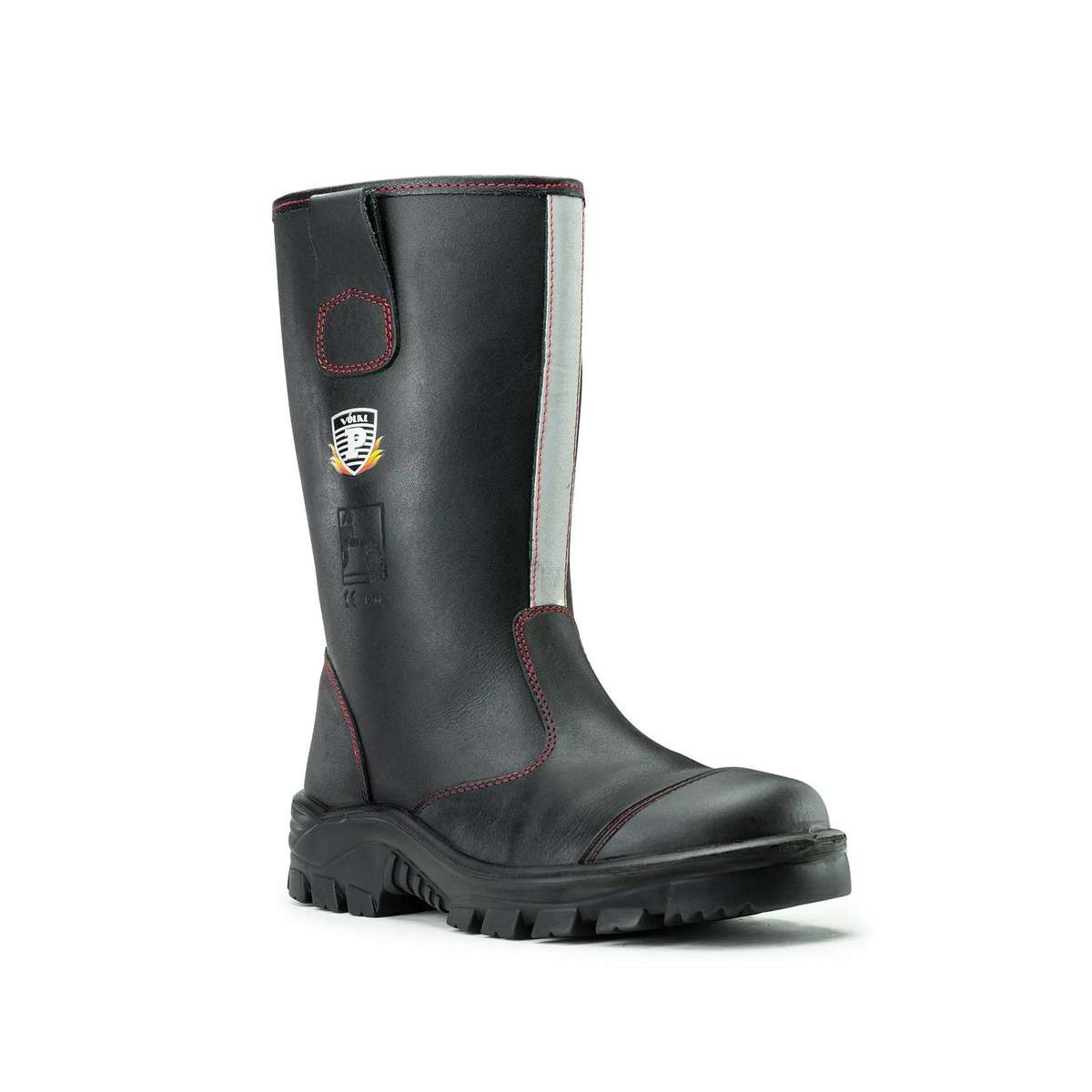
Voelkl
Voelkl Leutnant Pro
Lightweight tactical boot for fire officers and rescue teams
- Certification: EN15090:2012 — F2A HI3 SRC
- Upper: Nubuck leather with ballistic nylon panels, low-cut design
- Moisture barrier: GORE-TEX® Performance Comfort liner
- Closure: BOA® fast-lace system — single dial for rapid donning
- Toe cap: Lightweight composite (non-metallic), 200 J rated
- Outsole: Rubber/EVA compound, heat-resistant to 250°C, anti-static SRC
- Sizes: EU 38–47
- Weight (per boot): Approx. 550 g (size EU 42) — notably lighter than full structural boots
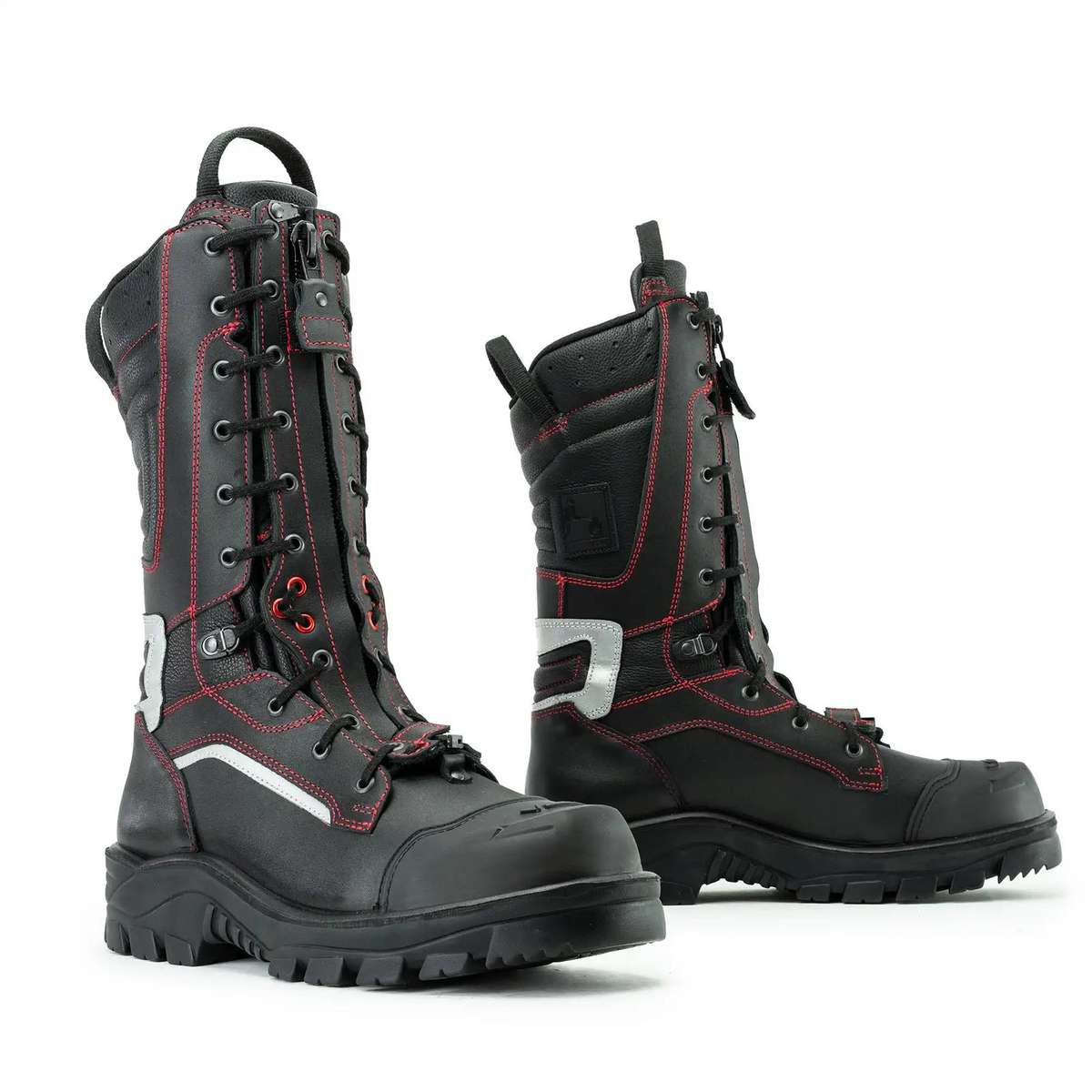
Voelkl
Voelkl ONE FF
Forest firefighting boot — wildland and rough terrain rated
- Certification: EN15090:2012 F2A + EN ISO 20347 OB SRC
- Upper: Full-grain leather with reinforced toe bumper and ankle guards
- Moisture barrier: Waterproof breathable membrane liner
- Outsole: Vibram® Montagna compound — deep lug, multi-terrain grip, heat-resistant to 300°C
- Ankle stabilisation: Lateral torsion control shank — prevents ankle roll on uneven terrain
- Heel counter: Reinforced external heel cap for slope braking
- Sizes: EU 38–47
- Weight (per boot): Approx. 680 g (size EU 42)
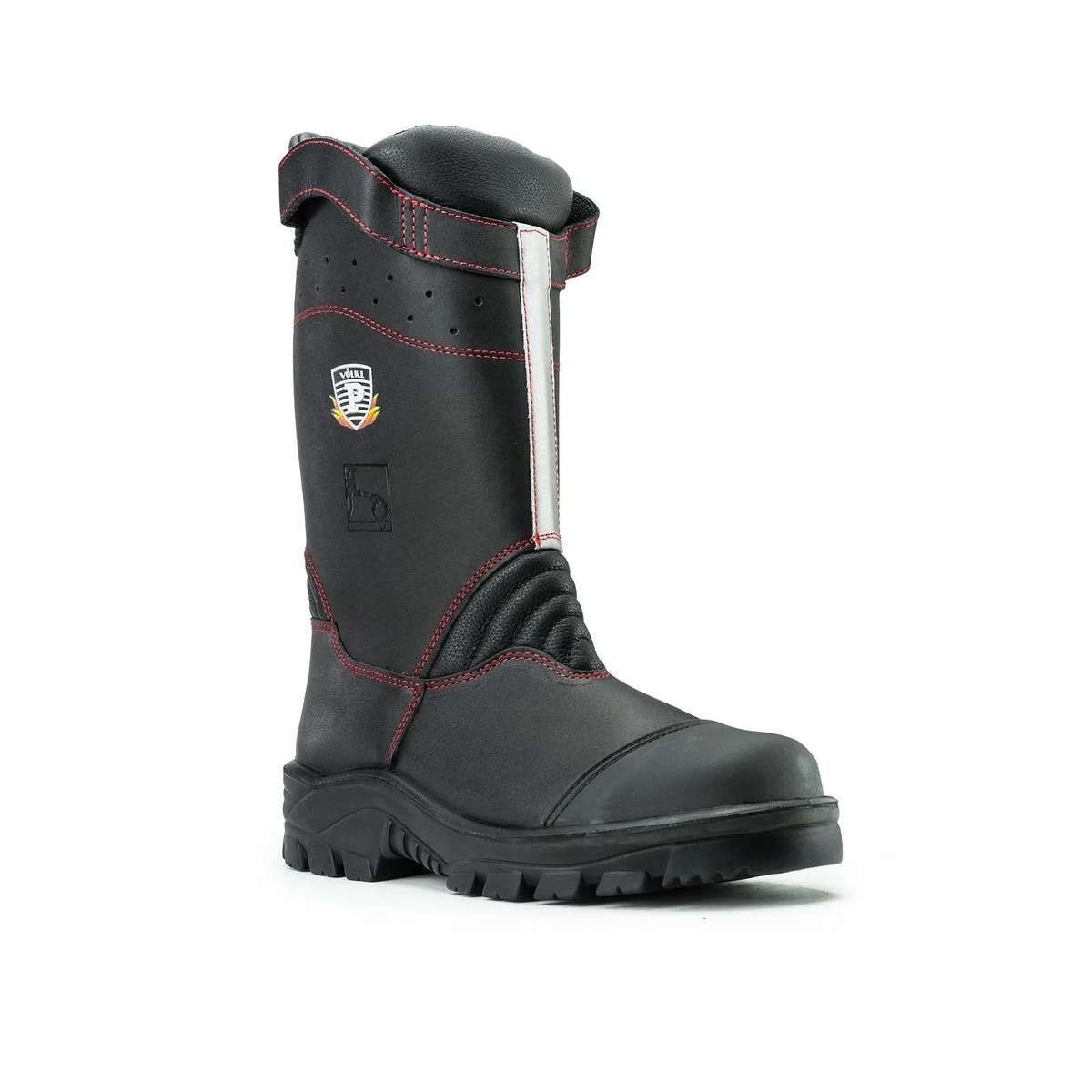
Voelkl
Voelkl Command
Dress boot for fire officers — formal appearance with fire protection
- Certification: EN15090:2012 — F1 SRC (officer/command category)
- Upper: Smooth, polishable full-grain leather — parade and dress suitable
- Closure: Side zip with lace backup — fast donning without compromising fit
- Liner: Leather lining with light moisture management layer
- Toe cap: Composite (non-metallic), 200 J rated — will not set off metal detectors
- Outsole: Rubber, oil and slip resistant (SRC), heat-resistant to 200°C
- Sizes: EU 38–48
- Weight (per boot): Approx. 620 g (size EU 42)
Voelkl
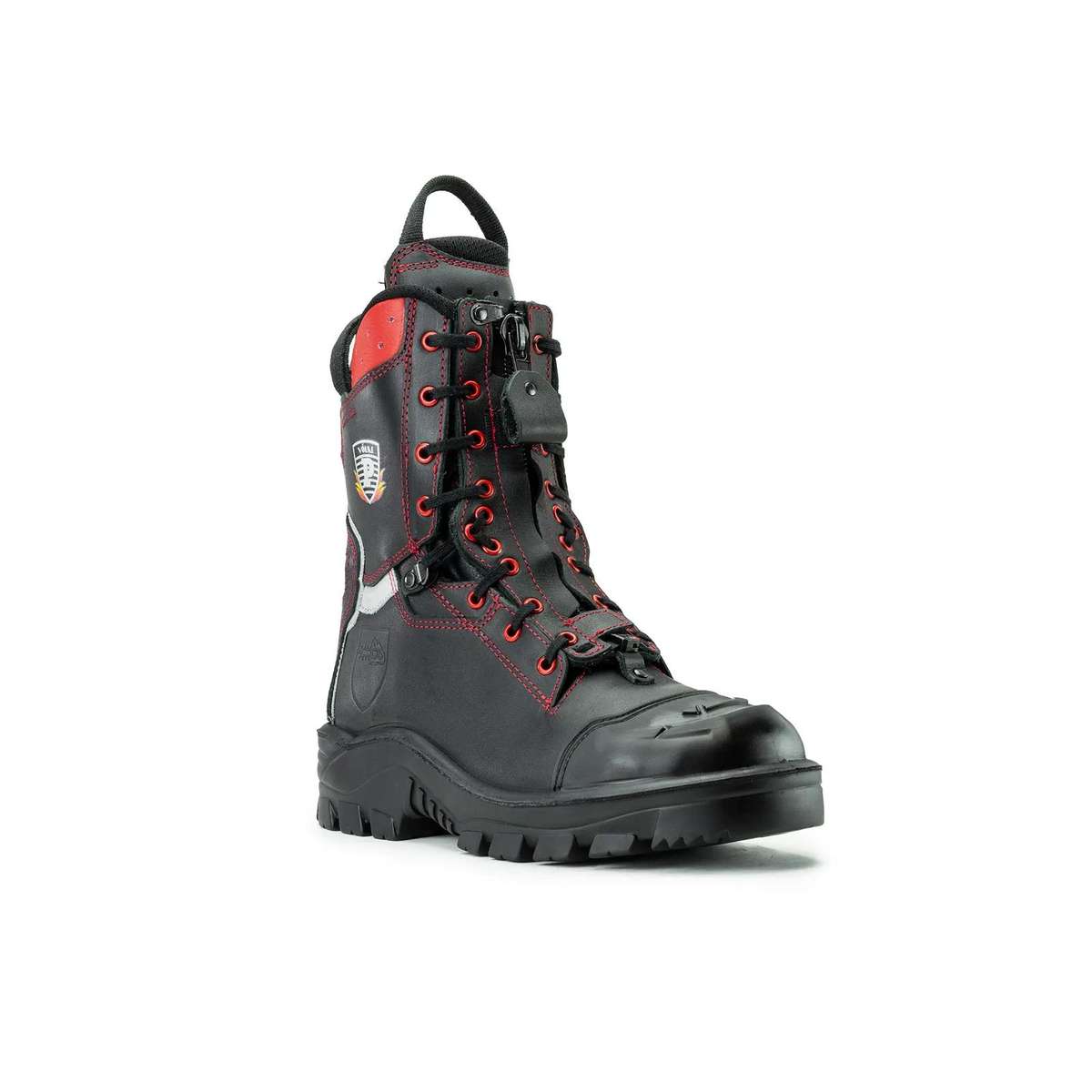
Voelkl Industry S3
Industrial safety boot for plant, refinery and petrochemical workers
- Certification: EN ISO 20345:2011 — S3 SRC (highest industrial safety class)
- Upper: Full-grain leather with reinforced toe box and ankle collar
- Toe cap: Steel, 200 J impact and 15 kN compression tested
- Midsole: Steel anti-penetration plate (≥1,100 N)
- Outsole: Nitrile rubber — oil, fuel and chemical resistant; SRC slip-resistant, heat-resistant to 300°C
- Anti-static: <1,000 MΩ — rated for ATEX zone environments
- Liner: Moisture-wicking mesh — full working-day comfort
- Sizes: EU 38–48
Voelkl
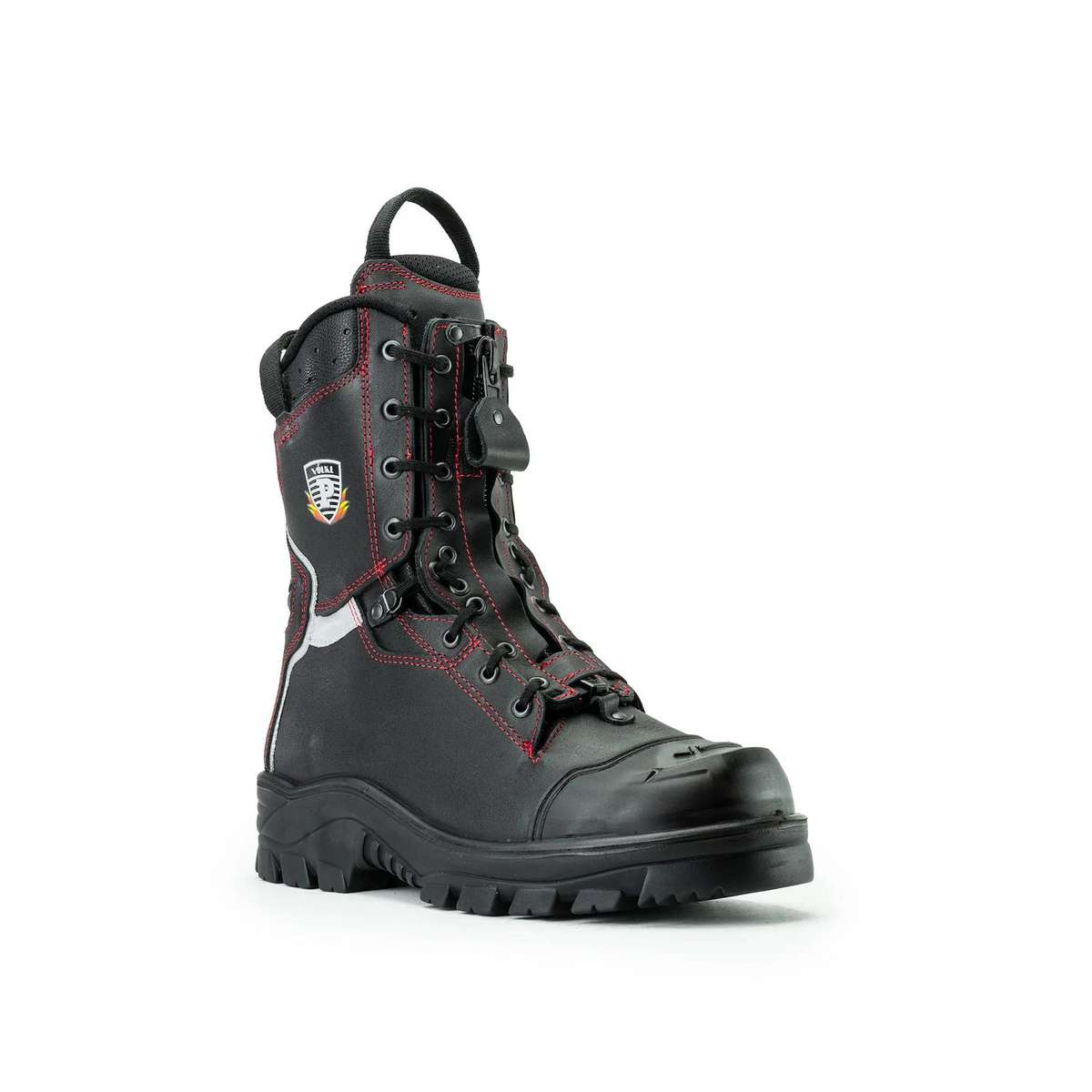
Structural Rubber Boot
Chemical-resistant rubber boot for HazMat, flooding and decontamination operations
- Certification: EN15090:2012 — F2A HI3 CI SRC + EN13832 chemical resistance
- Construction: Monolithic natural rubber — seamless, no stitching to penetrate
- Liner: Removable neoprene comfort liner with moisture management
- Toe cap: Steel, 200 J impact rated — encapsulated within rubber shell
- Outsole: Natural rubber compound, chemical resistant, heat-resistant to 300°C, SRC slip-rated
- Insulation (CI): Cold-insulated to −17°C ground contact
- Chemical resistance: Tested against acids, alkalis, hydrocarbons and CBRN agents
- Sizes: EU 36–48