Containment First — Stop the Spread Before You Stop the Leak
At a HazMat incident, stopping the source of the leak and preventing the spill from spreading are equally urgent — and sometimes the spill needs to be contained before the leak source can even be approached safely. Vetter's spill containment range addresses both the collection of escaping product and the protection of sewage systems and groundwater, using the same pneumatic deployment philosophy as the rest of the Vetter range: everything inflates on site from a flat-pack in the vehicle locker.
Products

Rigid drums and IBC totes take space in a vehicle and must be carried to every incident whether needed or not. Vetter pneumatic collection containers store flat in a locker and inflate on scene in minutes — creating an instantly available vessel to receive hazardous liquids collected from tanker spills, industrial leaks, or pump-out operations. Supplied with valves and drain connections for integration with collection tubs and vacuum drainage bags.
Key advantage: Zero stowage space cost when not deployed. Rapid setup time compared to locating and positioning rigid drums from a logistics vehicle.
Request a Quote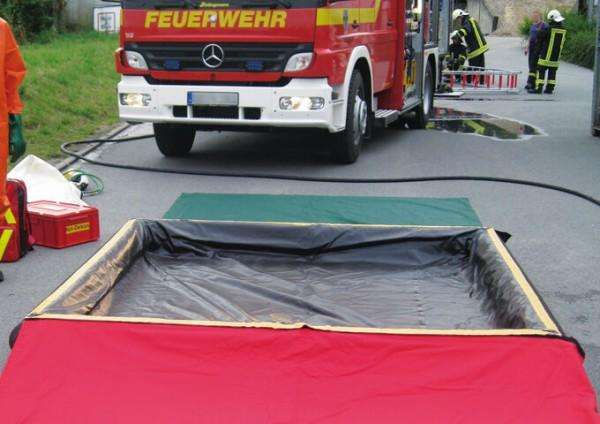
When a road tanker, rail wagon or stationary tank is leaking and the leak cannot be immediately sealed, product must not reach the ground. Vetter collection tubs are inflatable, low-profile containment vessels designed to be pushed under a leaking vehicle using a guiding pole — receiving the escaping product before it spreads. Once full, the collected liquid drains from the tub via a hose to a pneumatic collection container or other safe vessel.
Used alongside: Pipe sealing bags, sealing lance, and vacuum drainage bags as part of a complete first-response containment sequence.
Request a Quote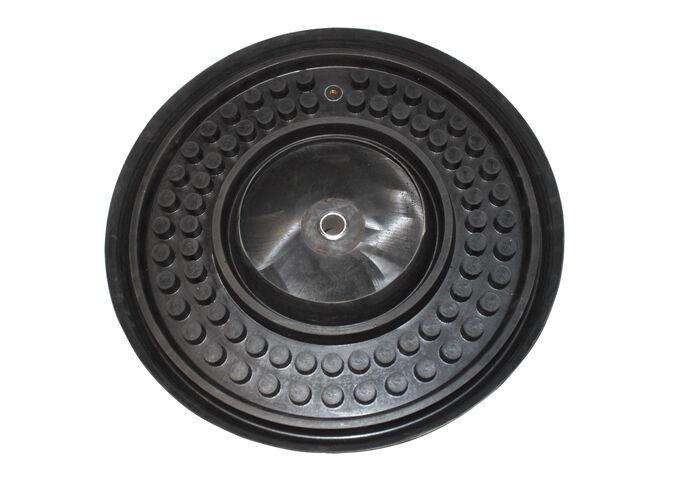
After product has been collected in a tub or at a pipe drain point, it must be transferred to a safe vessel without spillage or exposure. Vetter vacuum drainage bags provide the controlled transfer link — connecting the collection point to a storage container and moving product under controlled conditions. Used in fire service, industrial, and port HazMat response where direct pumping is not appropriate for the chemical involved.
Request a Quote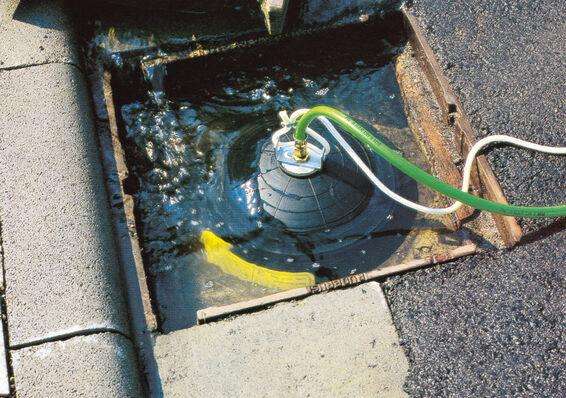
Deployed over the gully mouth, the compact gully sealing bag seals both the drain inlet and sewer entry simultaneously — preventing hazardous liquid from reaching the sewage system. Inflated by a 1-litre compressed-air cylinder supplied with the unit. Holds against up to 2 m water column counterpressure.
| Specification | Value |
|---|---|
| Max gully diameter | 80 cm (32 inch) |
| Max counterpressure | 2 m water column (2.9 psi) |
| Inflation | Compressed-air cylinder 1 l / 200 bar (supplied) |
| Transport case | 600 × 400 × 233 mm |
| Deployment | Single person, under 1 minute |
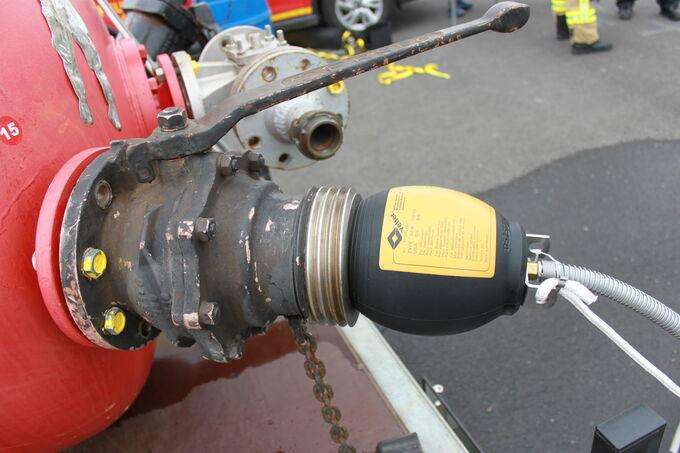
The universal gully bag is positioned at the gully outlet using a guiding rod, sealing from below — suited to road drains where top access is restricted or the gully type is non-standard. Inflated by foot pump. No external air supply required. Available as a basic set (one gully size) or premium set (two gully sizes), covering response teams that need to handle multiple drain types on the same incident.
Coverage: Road gullies, industrial site drainage inlets, port area floor drains, construction site drainage.
Request a QuoteIncident Response Sequence
Protect the sewage system first
On arrival, identify all road gully and drain inlets in the hazard zone. Deploy compact or universal gully sealing bags to all inlets before product reaches them — even if the incident appears minor. Sewage contamination can be a worse outcome than the original spill.
Contain the spill at source
Push a Vetter collection tub under the leaking tanker, tank or pipe using the guiding pole. The tub receives escaping product before it spreads. Inflate on site from flat-pack — takes under two minutes.
Inflate a collection container
Inflate a Vetter pneumatic collection container adjacent to the incident. Connect the drain from the collection tub via vacuum drainage bag — product transfers to the container under controlled conditions. The area around the incident remains clean.
Seal the source
With containment established, approach the leak source — apply a pipe sealing bag, sealing bandage, or sealing lance as appropriate. The collection and gully sealing equipment continues to contain any residual product while the source is sealed.
Incident Types
🚛 Road Tanker Accidents
Collection tubs position under the tanker; gully bags protect drainage; pneumatic containers store collected product for safe removal by hazardous waste contractors.
🚂 Rail Wagon Incidents
The same inflatable collection system is used at rail incidents where access under the wagon may be limited. Vacuum drainage connects collection points to containers.
🏭 Industrial Plant Spills
Plant drainage systems may feed directly to a watercourse. Rapid gully sealing and on-site pneumatic container deployment protects the environment while a pipeline repair is organised.
⚓ Port & Facility Incidents
Port area drainage inlets feed the sea. Universal gully bags seal non-standard port drain types. Collection containers receive product from tank and pipe incidents at berth or in storage areas.