Products
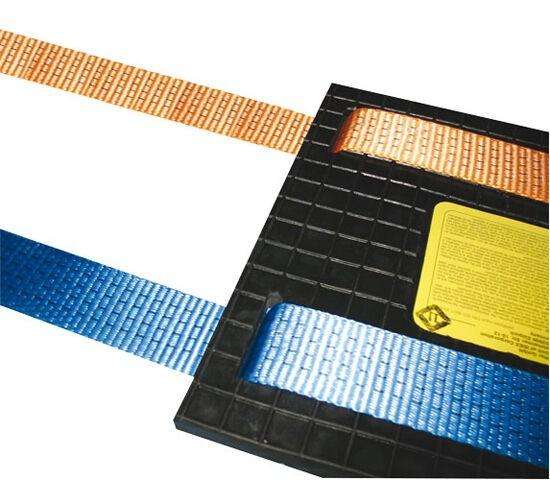
Every minute counts when hazardous liquids escape from tanks, pipes or drums. Vetter leak sealing bags inflate via foot pump — no external air supply required. Even pressure distribution protects structures around the leak and prevents it from spreading. Sealing plates included for sharp-edged leaks.
Typical applications: road tanker spills, drum and IBC leaks, above-ground pipeline failures, chemical storage tank incidents.
Request a Quote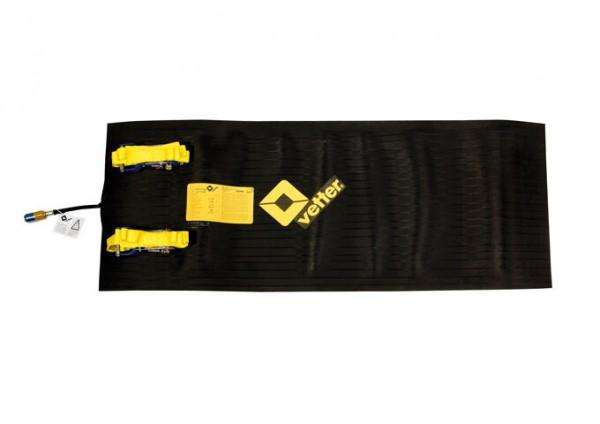
Sudden pipeline cracks can be sealed in an instant with Vetter leak sealing bandages. Three-step operation even on first use: wrap the bandage around the pipeline, tension the belt, inflate. No tools, no specialist training required. Ready to use from the transport case.
Typical applications: above-ground pipeline cracks, joint failures, HazMat rapid first response, chemical transfer line incidents.
Request a Quote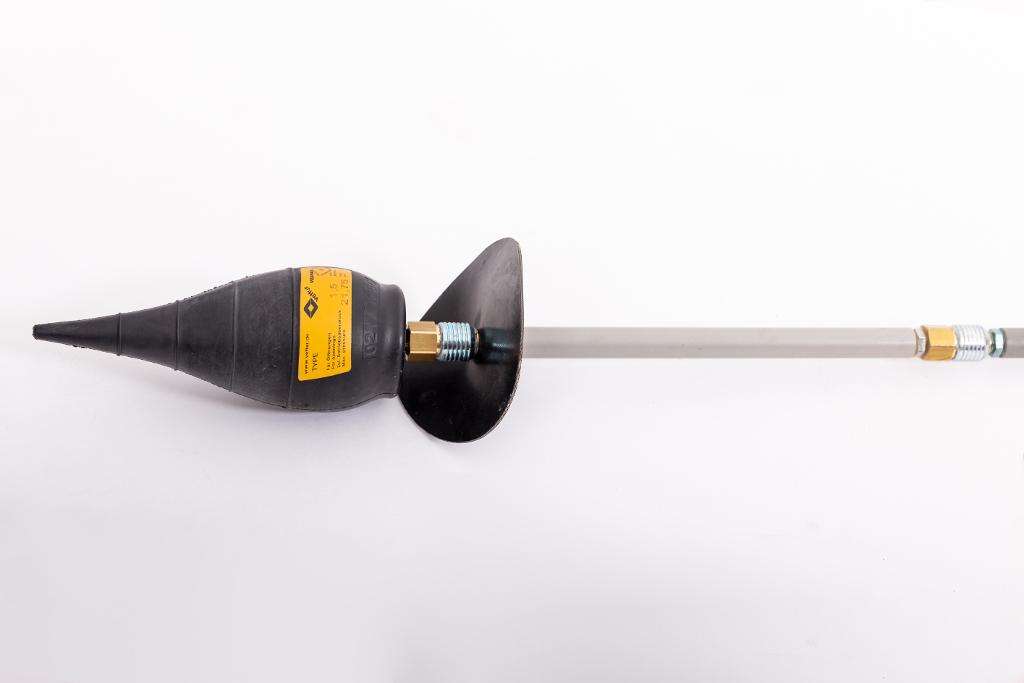
The Vetter leak sealing lance allows a single first responder to seal small leaks in storage tanks, road tankers or rail wagons in seconds from a safe distance — without assistance. Wedge and cone bags at the lance tip are pushed into the leak opening and inflated to reduce flow rate immediately.
| Bag Type | Crack / Hole Size | Working Pressure |
|---|---|---|
| Wedge Bag 6 | Cracks 15–45 mm / Width 6–9 cm | 1.5 bar |
| Wedge Bag 8 | Cracks 15–45 mm / Width 8–12 cm | 1.5 bar |
| Wedge Bag 11 | Cracks 30–60 mm / Width 11–17 cm | 1.5 bar |
| Cone Bag 7 | Holes 30–90 mm | 1.5 bar |
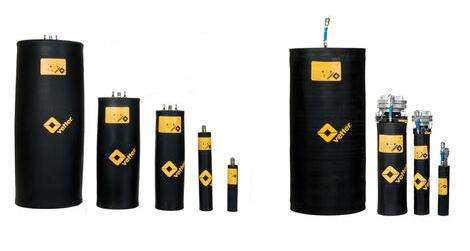
Developed specifically for fire services. Pipe sealing bags FS seal the pipe; bypass bags allow you to dam the flow and divert hazardous liquids and gases in a controlled manner via fire hose to a safe collection point. Bags individually adjust to multiple pipe diameters. Chemical and heat resistant — built to perform at HazMat incidents where standard bags would degrade.
Key feature: The bypass function prevents pressure buildup behind the seal and allows controlled flow diversion — critical when you cannot simply stop flow.
Request a Quote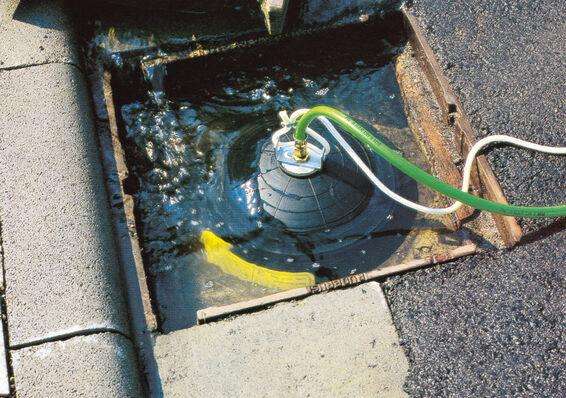
At any road or industrial incident involving hazardous liquids, preventing runoff from entering the sewage network is a priority. Compact gully sealing bags deploy immediately at the gully mouth, sealing the inlet and the sewer entry together. Withstands up to 2 m water column (2.9 psi) counterpressure. Inflated by supplied compressed-air cylinder.
| Specification | Value |
|---|---|
| Max gully diameter | 80 cm (32 inch) |
| Max counterpressure | 2 m water column (2.9 psi) |
| Inflation | Compressed-air cylinder 1 l / 200 bar |
| Transport case | 600 × 400 × 233 mm |
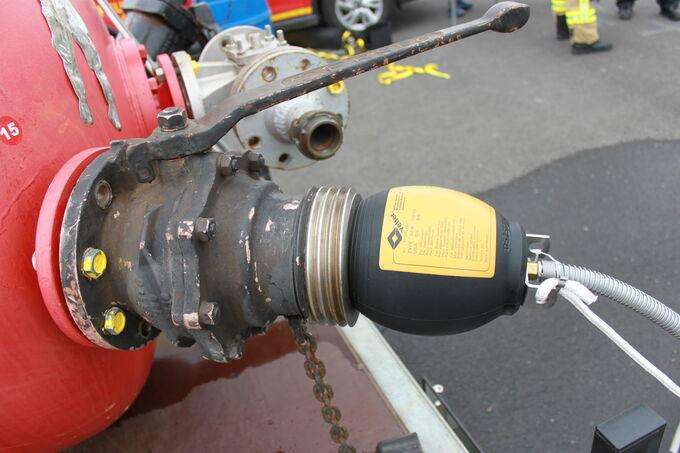
Position with a guiding rod directly at the gully outlet and use the sewer inlet as a pump sump. Inflated by foot pump. Stops hazardous liquids entering sewage and groundwater on roads, industrial sites and port areas. Available as basic set (one gully size) or premium set (two gully sizes) for response teams covering multiple drain types.
Request a Quote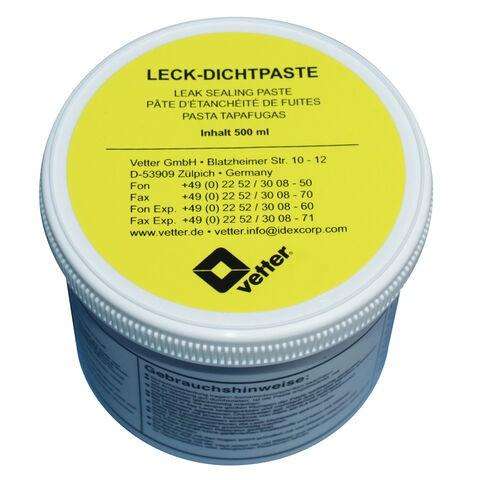
Leaking valve connectors, small flanges, and container seams require a different approach. Vetter leak sealing paste is applied directly to the leak to stop flow immediately and buy time for proper repair. Ideal for small connectors and receptacles where bag systems cannot be positioned. Supplied as a set of 8 cans (500 ml each).
Request a QuoteCommon HazMat Incident Types
🚛 Road Tanker Accidents
Leak sealing bags and the sealing lance are standard equipment for tanker incidents — seal from a distance, reduce flow, then apply bypass bags to divert remaining product safely.
🏭 Pipeline Ruptures
Sealing bandages provide instant wrap-and-inflate response on above-ground pipeline cracks. Pipe sealing bags FS handle larger diameter pipes at fire service HazMat incidents.
🛢️ Drum & IBC Leaks
Leak sealing bags and paste seal drums, IBCs and small storage vessels at chemical incidents. Compact and storable in a standard HazMat vehicle locker.
🌊 Sewage Protection
Compact and universal gully sealing bags prevent hazardous runoff from reaching the sewage network — deployed at road accidents, spills, and industrial site incidents.