Fire Helmet Lights — NFPA 1971 Certified
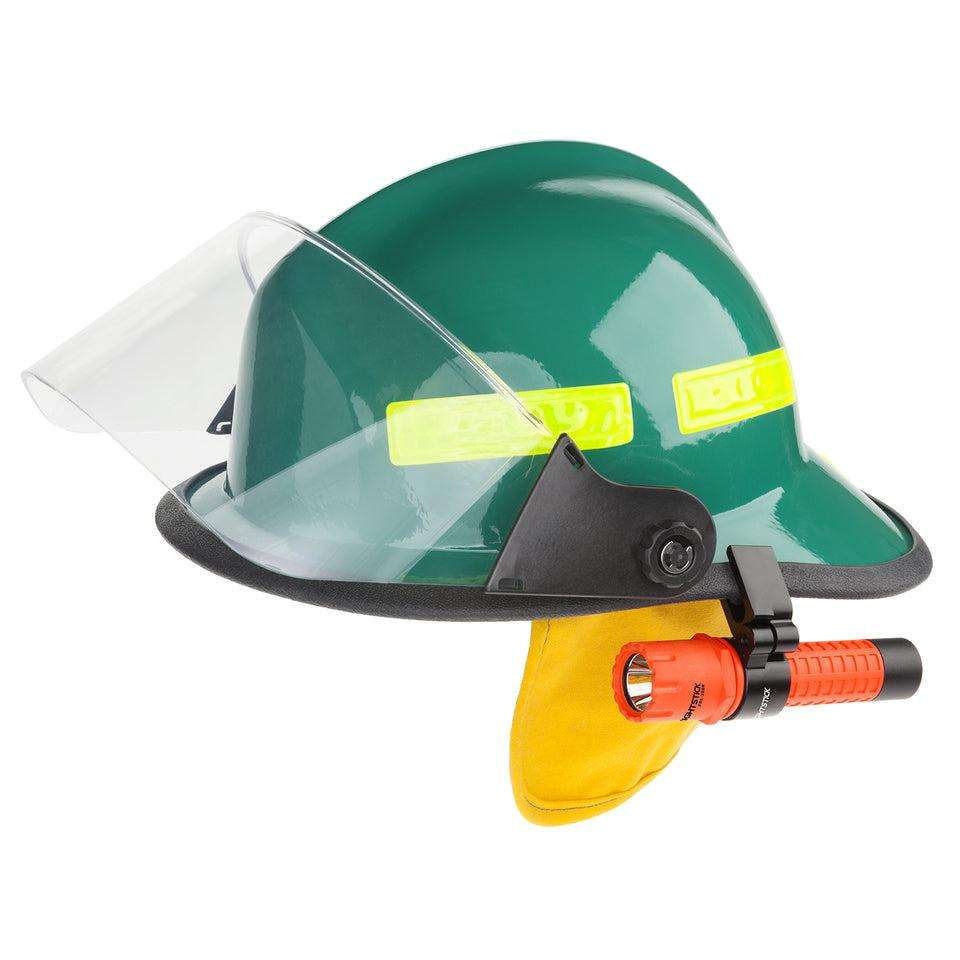
NFPA 1971 Section 8.6 (2018 Edition) — the mandatory standard for fire service flashlights. All models mount to any structural fire helmet with 360° adjustable bracket.
Nightstick
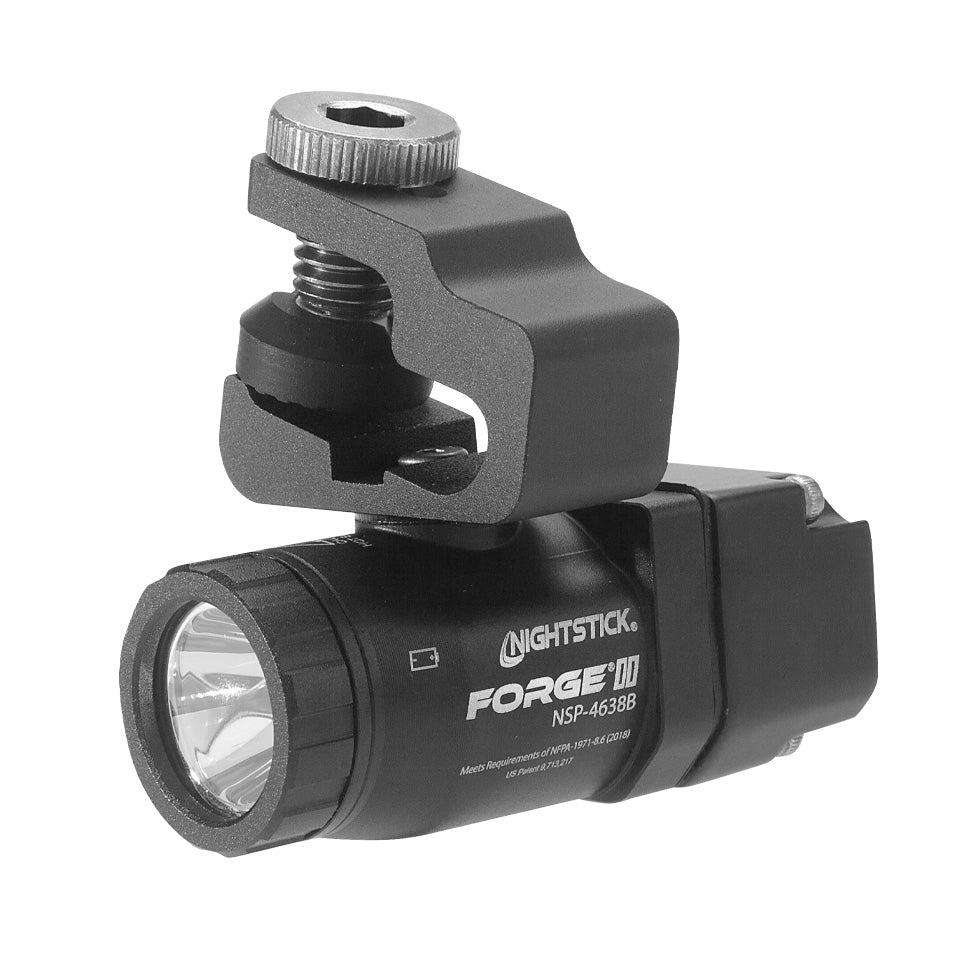
NSP-4638B — FORGE® II
Newest FORGE model — high-candela single CR123A helmet light with 172 m beam
- NFPA 1971-8.6 (2018 Edition) certified
- 350 lm high / 125 lm low
- 7,360 candela peak beam intensity
- Beam distance: 172 m
- IP-67 waterproof (1 m / 30 min)
- 1× CR123A battery — 3.4 oz (96 g)
- 360° adjustable helmet mount
Nightstick
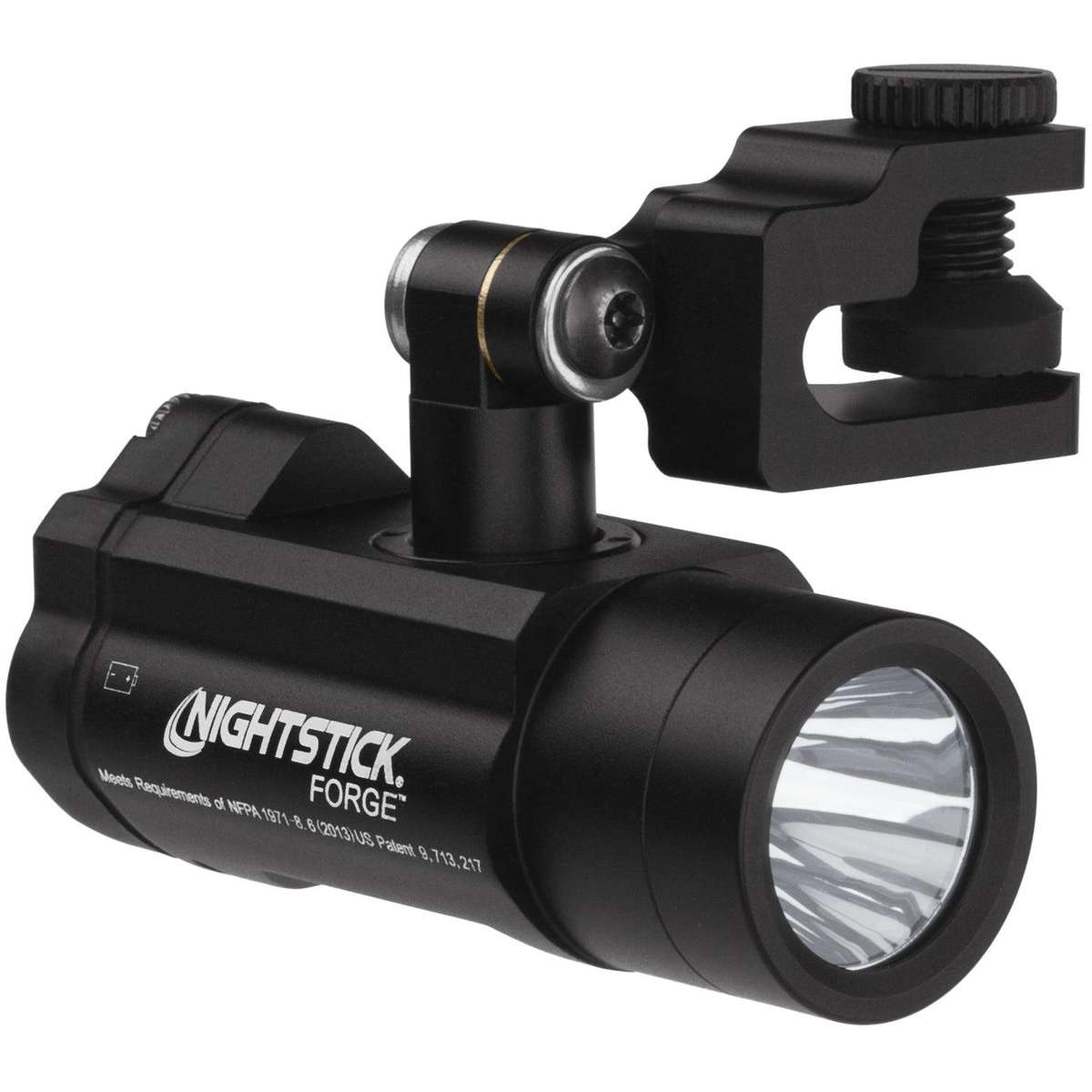
NSP-4640B — FORGE®
Multi-mode fire helmet light with the longest beam in the FORGE range — 218 m
- NFPA 1971-8.6 (2018 Edition) certified
- 360 lm high / 180 lm med / 30 lm low
- 11,928 candela peak beam intensity
- Beam distance: 218 m
- IP-X7 waterproof (1 m / 30 min)
- 2× CR123A batteries
- 360° adjustable helmet mount + strobe
Nightstick
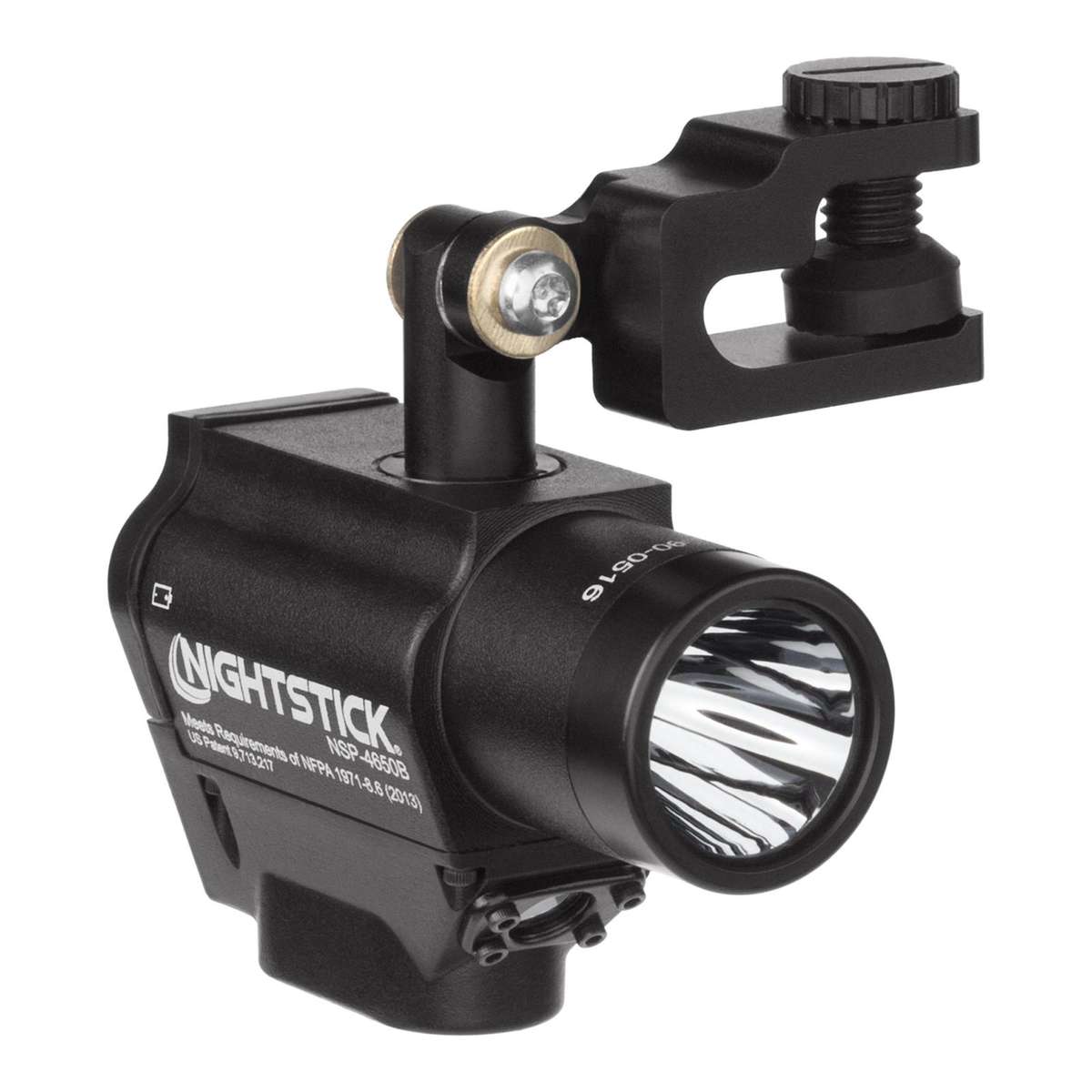
NSP-4650B — FORTEM® Dual-Light
Spotlight + integrated floodlight in one NFPA-certified helmet mount — hands-free wide-area illumination
- NFPA 1971-8.6 (2018 Edition) certified
- Spotlight: 220 / 100 / 30 lm
- Floodlight: 100 / 50 / 15 lm
- 8,073 candela — 183 m beam
- IP-X7 waterproof
- 2× CR123A batteries
- 360° helmet mount + strobe
Nightstick
FDL-300R-K01 — Tactical Fire Light
Momentary-on or constant-on tactical light with 140° adjustable mount — simple, reliable, 190 m beam
- NFPA 1971-8.6 (2018 Edition) certified
- 180 lm output
- 9,150 candela peak beam intensity
- Beam distance: 190 m
- IP-X7 waterproof
- 2× CR123A batteries
- Momentary or constant-on operation
- 140° adjustable helmet mount (kit included)
Intrinsically Safe Fire Helmet Lights — Zone 0 / Zone 2
NFPA 1971 fire certification combined with ATEX/IECEx intrinsic safety — for hazmat teams, industrial fire brigades, and operations in explosive atmospheres.
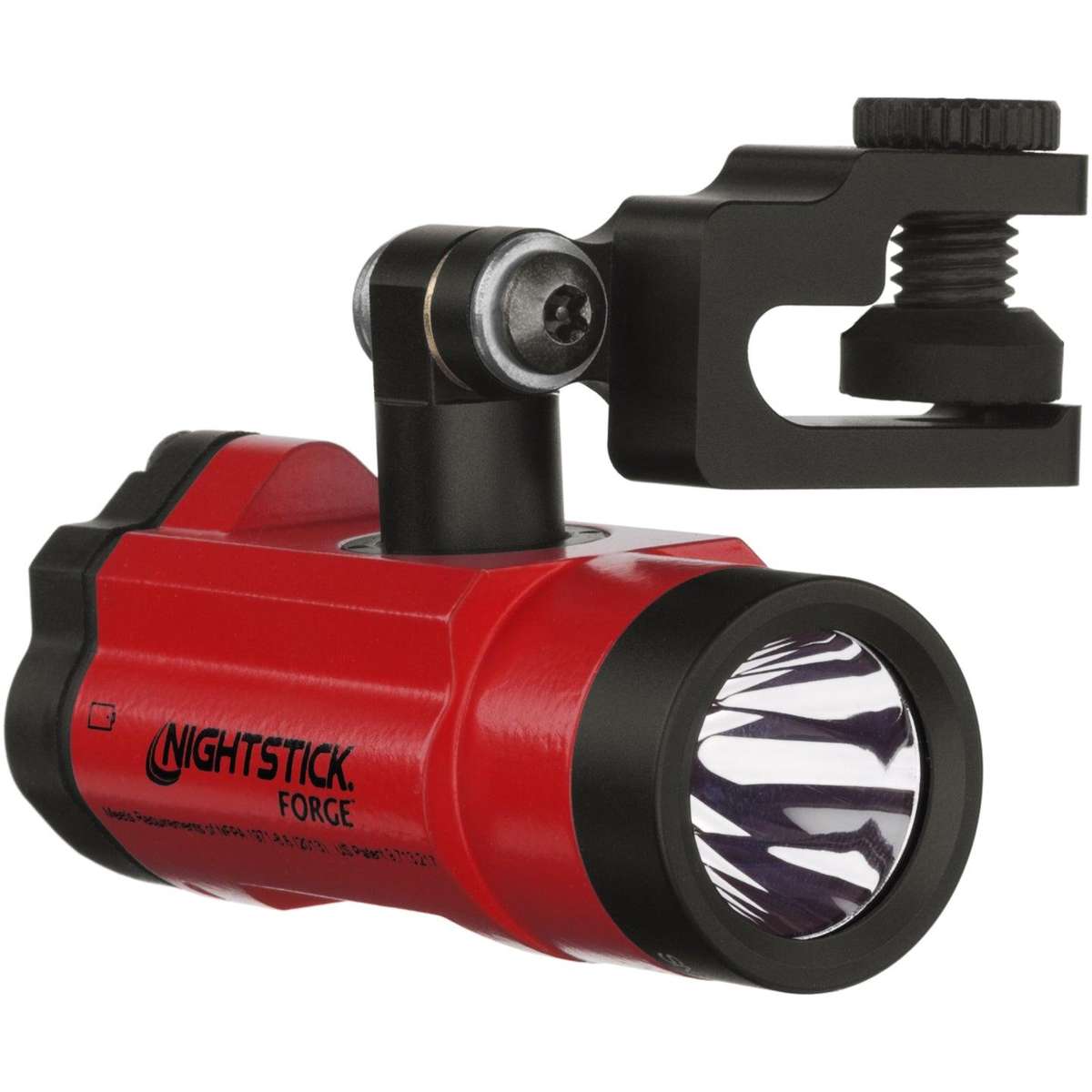
Nightstick
XPP-5465R — FORGE® IS
Full FORGE® performance with Class I Division 2 / Zone 2 intrinsic safety — for industrial fire brigades
- NFPA 1971-8.6 (2018 Edition) certified
- Class I Div 2 / Zone 2 IS certified
- 360 lm high / 180 lm med / 25 lm low
- 11,928 candela — 218 m beam
- IP-67 waterproof
- 2× CR123A batteries
- 360° adjustable helmet mount
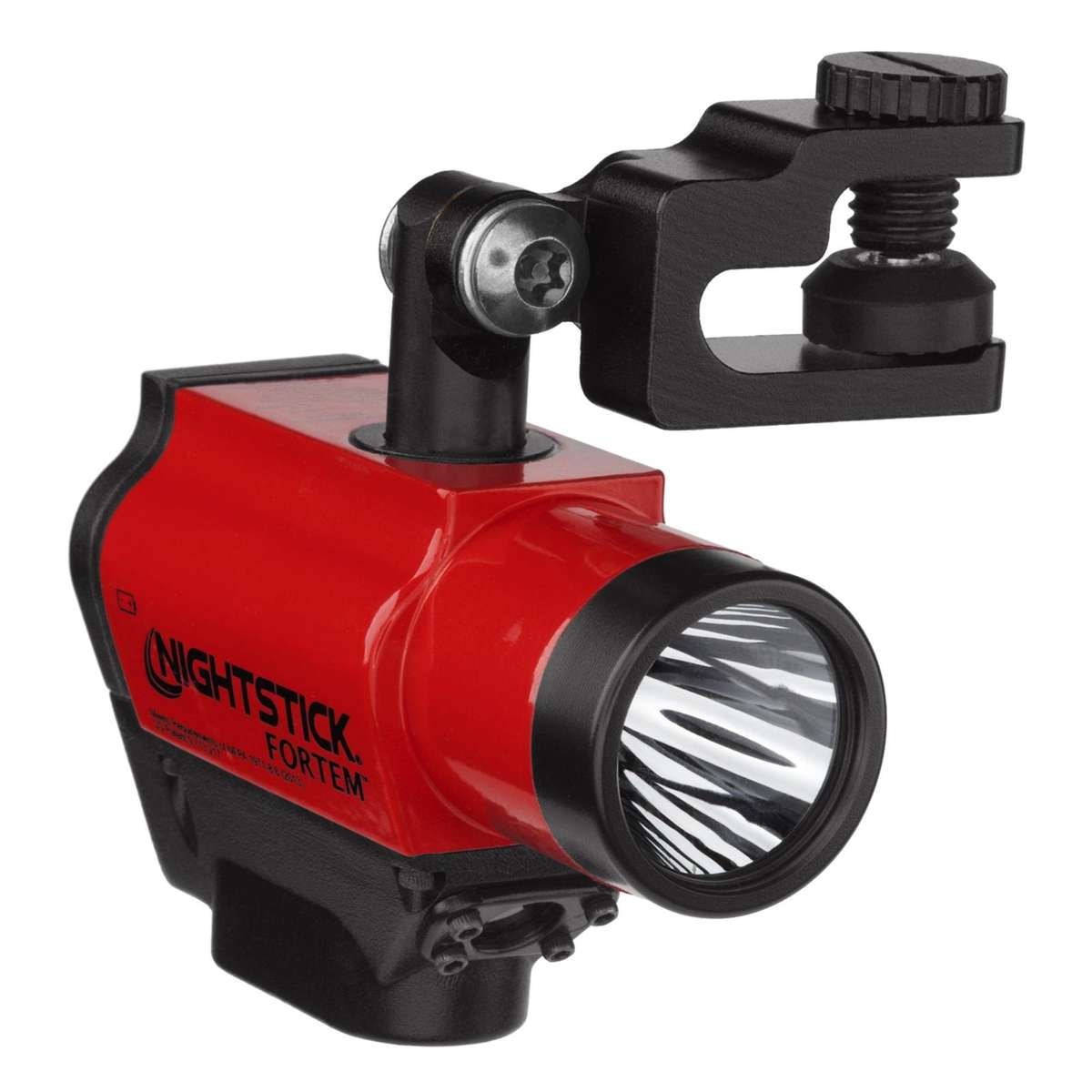
Nightstick
XPP-5466R — FORTEM® IS Dual-Light
Zone 0 (Ex ia IIC T4 Ga) dual-light helmet torch — the highest IS classification available for fire service lighting
- NFPA 1971-8.6 (2018 Edition) certified
- Class I Div 1 / Zone 0 IS (Ex ia IIC T4 Ga)
- Spotlight: 250 / 100 / 25 lm
- Floodlight: 115 / 50 / 10 lm
- 10,335 candela — 203 m beam
- IP-67 waterproof
- 2× CR123A batteries + strobe
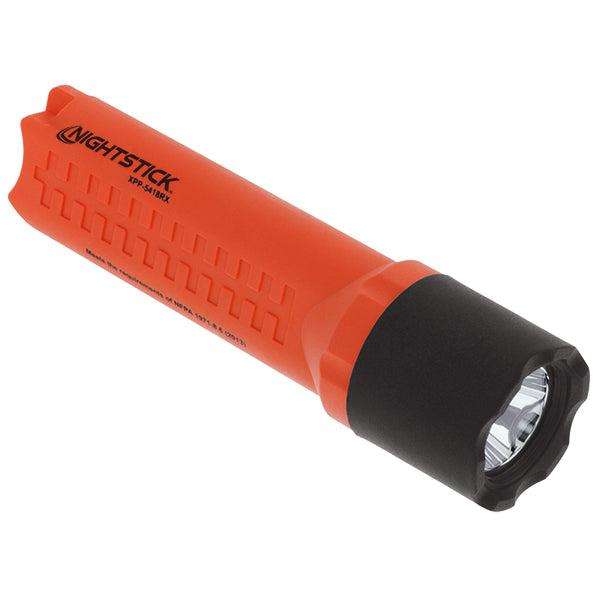
Nightstick
XPP-5418RX — IS Flashlight (Zone 0)
Zone 0 intrinsically safe handheld flashlight on standard AA batteries — convertible to helmet mount via optional kit
- ATEX / IECEx Zone 0 certified
- 200 lm output
- IP-67 waterproof
- 3× AA alkaline batteries
- Helmet mount kit available (XPP-5418RX-K01)
- Suitable for explosive gas and vapour atmospheres
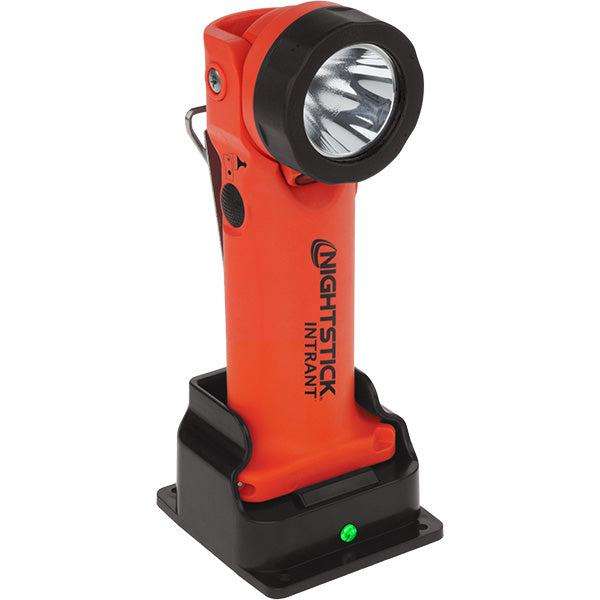
Nightstick
XPR-5568RX — INTRANT® IS Rechargeable Dual-Light Angle Light
Zone 0 (Ex ia IIC T4 Ga) rechargeable dual-light angle light — pivoting flashlight + 45° downward LED flashlight — rechargeable Li-ion
- Zone rating: Zone 0 (Ex ia IIC T4 Ga)
- Output: 200 lm / 500 lm
- Battery: Internal Li-ion, USB-C charging
- IP rating: IP67